ByJohn A
Understanding Wireless Charging Technology
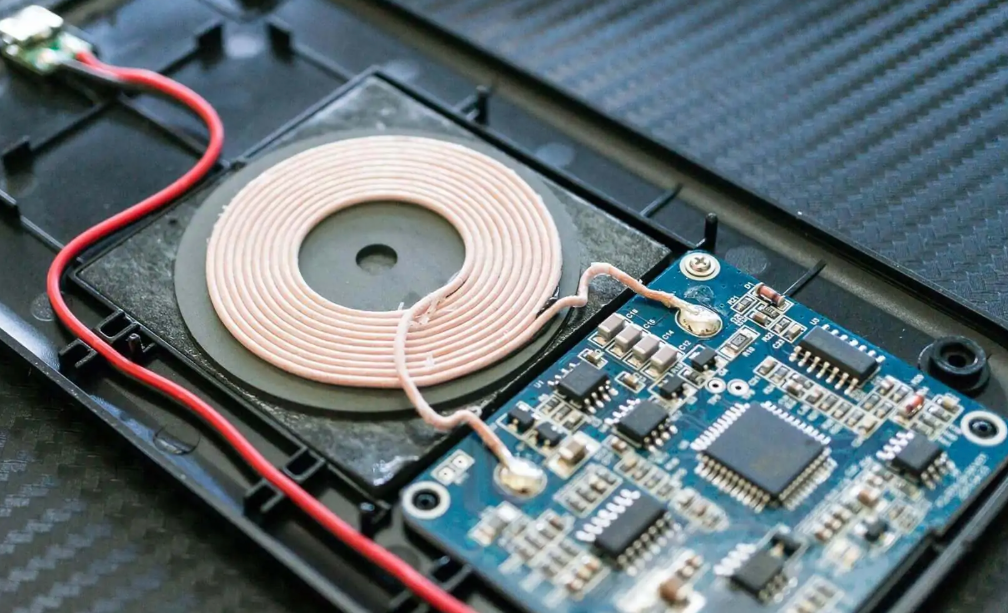
Wireless charging relies on near-field power transfer between source and receiver coils, typically via resonant inductive coupling at kilohertz to megahertz. Inductive systems demand tight coupling and high Q, while resonant systems extend range at some efficiency cost. Performance depends on coil geometry, coupling factor, load dynamics, and conversion losses, with real-world benchmarks near 70–90% under optimal conditions. Interoperability hinges on standards and alignment, yet practical constraints and case effects leave unresolved questions as speeds vary.
What Is Wireless Charging and How It Gets Power
Wireless charging transfers electrical energy from a source coil to a receiver coil via near-field electromagnetic coupling, typically using resonant inductive coupling at frequencies in the several hundred kilohertz to a few megahertz range.
The system contrasts inductive vs. resonant approaches, with trade-offs among efficiency vs speed, coupling strength, and alignment tolerance, yielding quantified power transfer and design margins for freedom-minded engineering.
Inductive vs. Resonant: The Core Technologies Explained
Inductive and resonant wireless charging represent two distinct approaches to near-field power transfer, each defined by its coupling mechanism, operating frequency range, and sensitivity to misalignment.
Inductive contrast emphasizes tight coupling, high Q, and strong positional tolerance variation, while resonant tradeoffs prioritize extended range and coupling resilience at the expense of efficiency. System designers quantify coupling factors, tolerances, and load responses for standardized implementations.
See also: Virtual Learning Environments
How Efficient Is Wireless Charging and What Affects Speed
Efficiencies of wireless charging hinge on the transfer chain between the source coil and receiver coil, with system-level output defined by input power, coil coupling factor, and conversion losses. The efficiency depends on alignment, distance, and material losses, yielding efficiency benchmarks around 70–90% in optimized setups.
Charging speed factors include coil geometry, power electronics, and core saturation limits within regulatory bounds.
Choosing Pads, Phones, and Standards for Real-World Interoperability
Choosing Pads, Phones, and Standards for Real-World Interoperability requires a precise assessment of compatibility matrices among transmitter pads, mobile devices, and governing specifications. Pad compatibility metrics quantify coil size, alignment tolerance, and efficiency. Standard interoperability evaluates BPP/Qi variants and authorization. Phone case impact, power adapter trade offs, and thermal behavior constrain practical setups, enabling data-driven selection for reliable, universally compatible charging configurations.
Frequently Asked Questions
Are There Health Risks From Long-Term Exposure to Wireless Charging Fields?
The answer: There are no established health risks from long term exposure to wireless charging fields within current regulatory limits; quantitative assessments show negligible whole-body dose, with exposure well below international thresholds for chronic effects.
Can Wireless Charging Damage Batteries or Shorten Device Lifespan?
Wireless charging can cause battery degradation and affect lifespan if heat is unmanaged; however, with proper heat management and optimized charging protocols, damage is minimized, preserving capacity, cycle life, and performance within manufacturer specifications.
Do Cases, Magnets, or Metal Clips Affect Charging Performance?
Case interference can reduce charging efficiency by up to 10–15% when cases exceed 4 mm. Metal clip impact varies with alignment, potentially causing 5–20% power loss. Precision measurements emphasize consistent spacing and nonferrous materials for optimal performance.
Is Wireless Charging Faster With Higher Wattage Chargers?
Higher wattage can increase charging speed, but gains depend on alignment and device limits; charging efficiency improves up to design thresholds, while heat management becomes critical as higher power raises temperature, potentially reducing efficiency and battery longevity.
How Secure Are Wireless Charging Pads Against Theft or Data Risks?
Security concerns are modest but measurable: data risks arise mainly from embedded peripherals, magnetic interference is minimal with proper shielding, and metal accessories significantly impair charging. Overall risk is quantifiably low, yet metal elements amplify exposure and vulnerability.
Conclusion
Wireless charging yields power via near-field magnetic coupling, with inductive and resonant variants defining coupling, Q factors, and alignment sensitivity. In optimized systems, practical efficiencies typically reach 70–90% with alignment and load matching driving performance. An anticipated objection—that wireless charging is slower than wired—is mitigated by higher-end pads and coils achieving rapid, near-peak transfer during typical device use, while standardization (Qi/BPP) ensures real-world interoperability. The result is predictable, repeatable charging profiles suitable for daily use with minimal user input.